Dendrochronology
Archaeologist sometimes find wood in their excavations, which might have been used a long time ago for building a house or making tools. When they find wood, they are often excited because it can help them to figure out how old a tool or house is! One of the methods they use for this is called "dendrochronology".
It relies on counting the so called "growth rings" of trees, to figure out how many years old that tree is. This is something you can even do yourself! When a tree is cut down, you can see different rings inside, each growing bigger as you move away from the centre. You can clearly see this in the picture below:
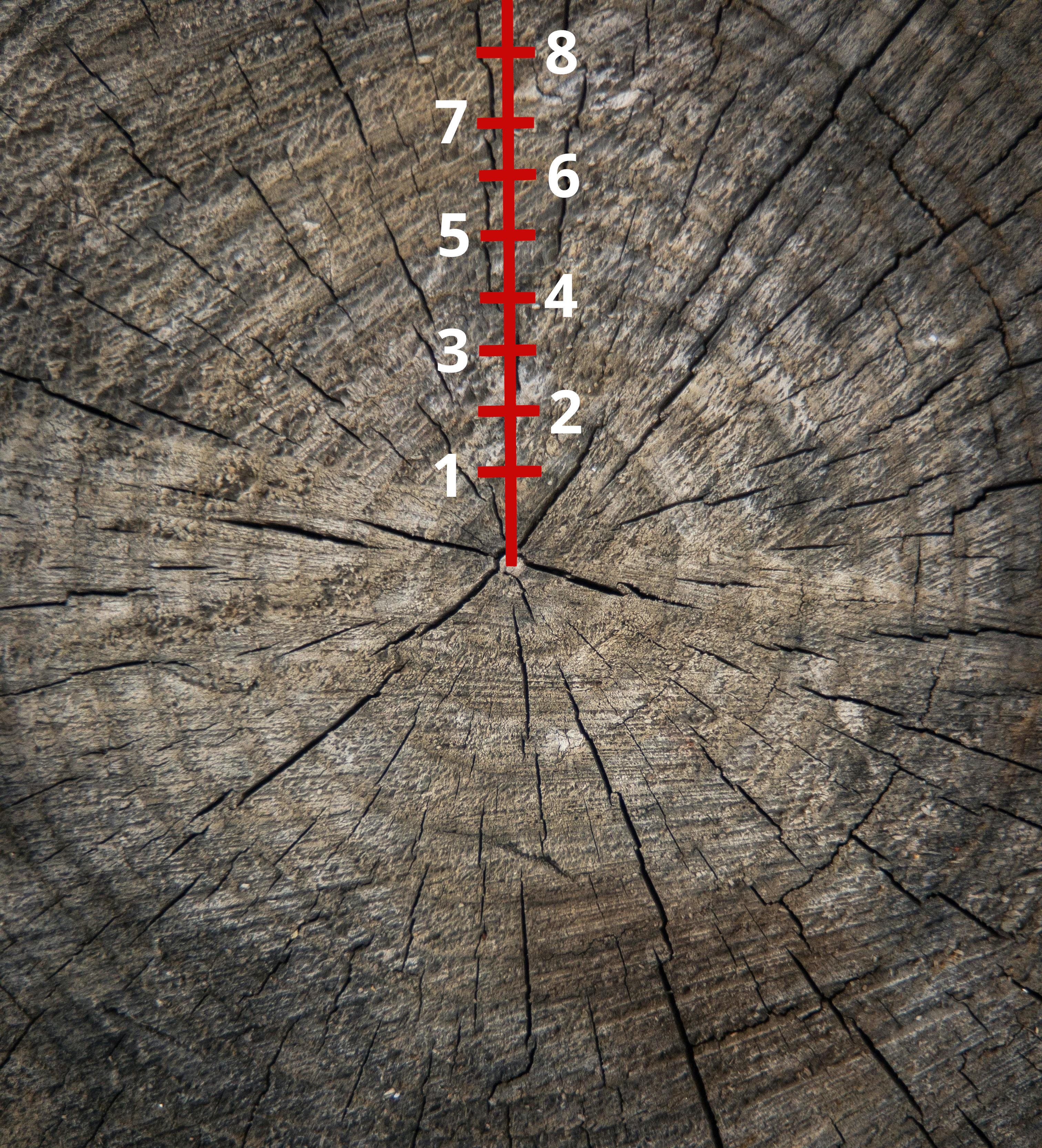
By counting these rings (1 ring = 1 year), we know exactly how many years old this tree is, from the moment it started growing to the moment it was cut down. If the rings are close together, it means that the tree had more difficulty to survive, because of too little water for example. When the rings are further away from each other, it means the tree had a very good year.
But while this tells us how long the tree lived, how can archaeologists determine when it was used by people in the past? To answer this, they have created very long lists of tree rings from different trees through time. With this, archaeologists can count tree rings from now until thousands of years ago! By comparing the tree rings from the excavation to these lists, they can know exactly how long ago it was used!
Unfortunately, these lists are not always complete or it might be difficult to compare the tree from the excavation to the list. Therefore, archaeologists often use it together with other dating methods such as radiocarbon dating.